
Through a glass darkly – Rolleicord Art Deco 1934 with Zeiss Triotar 75mm f3.5
For a brief period in the 1930s Franke and Heidecke, the makers of Rollei twin lens reflex cameras made the Art Deco, a beautifully patterned brass panelled camera, known in Germany as the Tapeten Teppich – wallpaper carpet.
This is one of the best I’ve seen, only the film advance knob missing the decoration. In function though it is the same as any other Rolleicord 1, with Compur shutter and Zeiss Triotar 75mm f3.5 taking lens.
First impressions count for a lot – the viewfinder is dark, like most of this era, and there is no loupe to help with exact focus. Film loading is simple – advance the backing paper until the twin arrow is about a centimetre on from the first bar, then shut the back, open the red window at the bottom and advance until 1 appears, close it and zero the frame counter to 1, click and it does it automatically.
Transporting it in the Ever Ready case, in excellent condition, is easy but shooting with it is not. Take it off and get a strap. All the controls are then obvious and easy to use, plus you can rest it on a flat surface.
Rather than shoot yet another giant prawn, I took it on to Dartmoor with heavy skies and mixed light. In low light focus is a harder than I’m used to, but as long as you shade the viewing screen, I recommend an IQ reducer also known as a baseball cap, detail is clear in the screen.
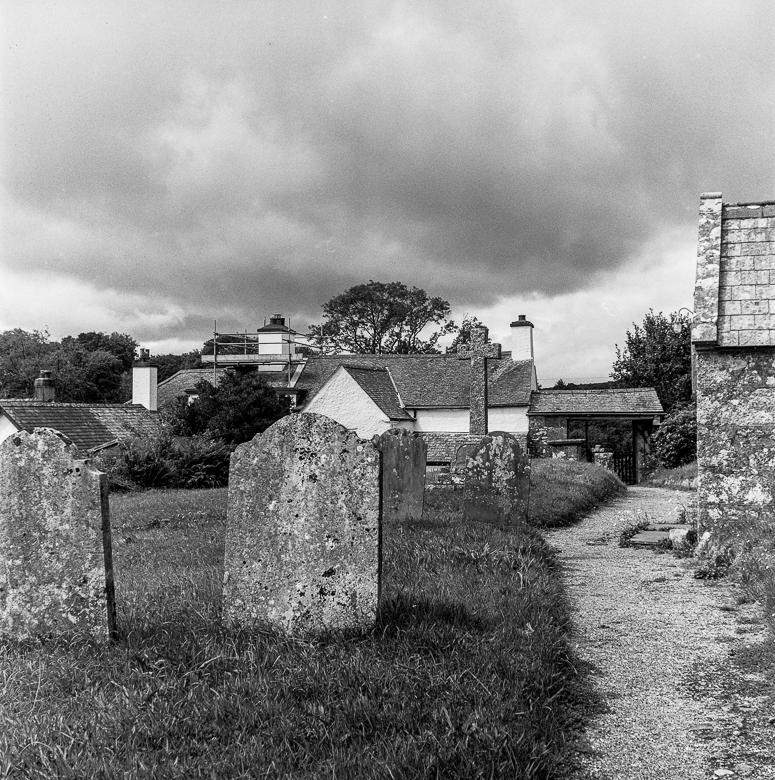
Up to Walkhampton church to get a super shot of the church, church house and a tiniest bit of my thumb. Fortunately this was the only appearance of anything digital, except that of my scanner which is adding lines to my scans – it’s not the camera.
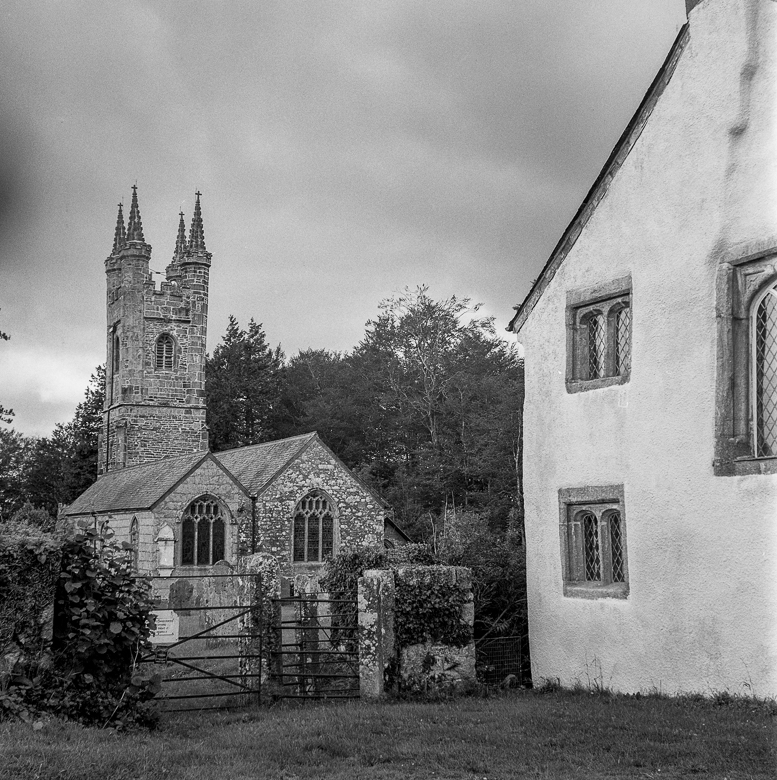

So, advance, set shutter and aperture, cock shutter to the right, fire by pushing to the left. No great sound or fuss. Get into that discipline of advance after each shot and you minimise the risk of a double exposure.
This lens is really very sharp when stopped down – frankly I am staggered by its performance. Like most triplets it’s soft at the edges but despite being uncoated it gives excellent contrast and only when wide open is It a bit soft. No flare yet experienced.
A slow navigation of tiny lanes from Walkhampton to Sheepstor church via Burrator follows. is always a good place to test a camera. It’s a fascinating mediaeval building, with the graves of the Brooke White Rajahs of Sarawak to be found, incongruously, in the churchyard.
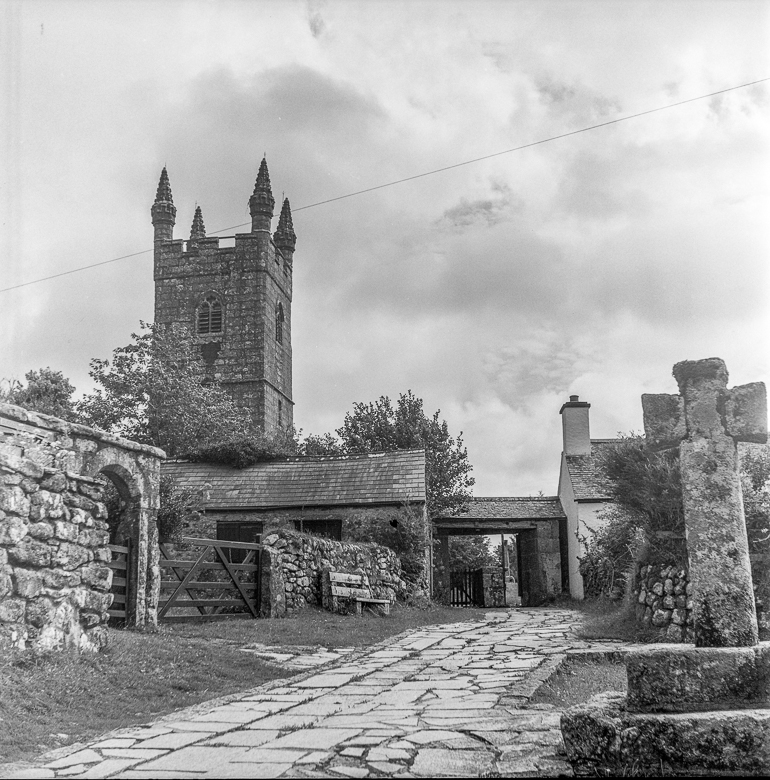
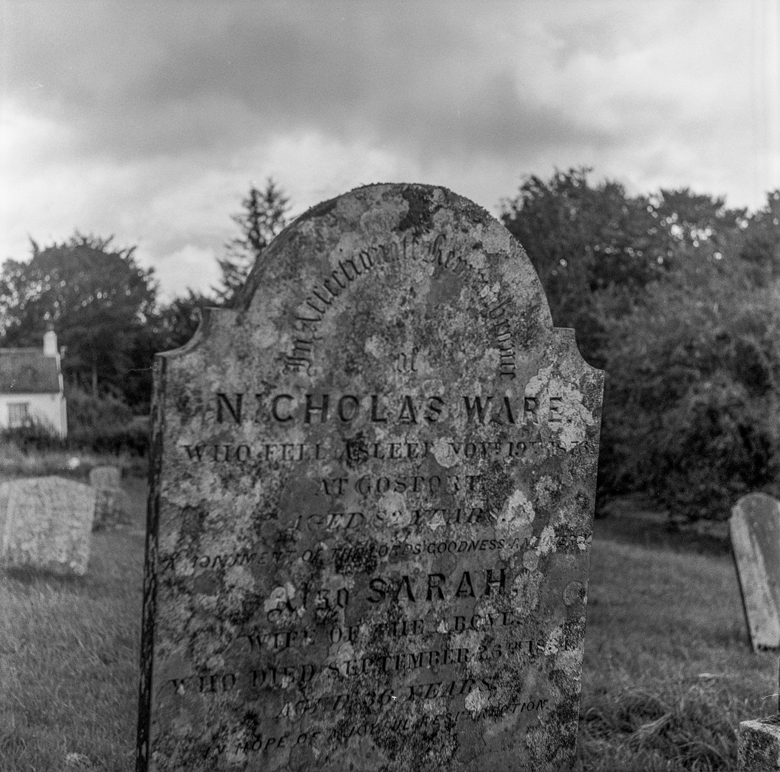
Close up on some gravestones to test the closer focus. The screen is dark but shade it and focus snaps up. It takes more effort than a Rolleiflex with loupe, but it starts to become easier, even for my tiring eyes.
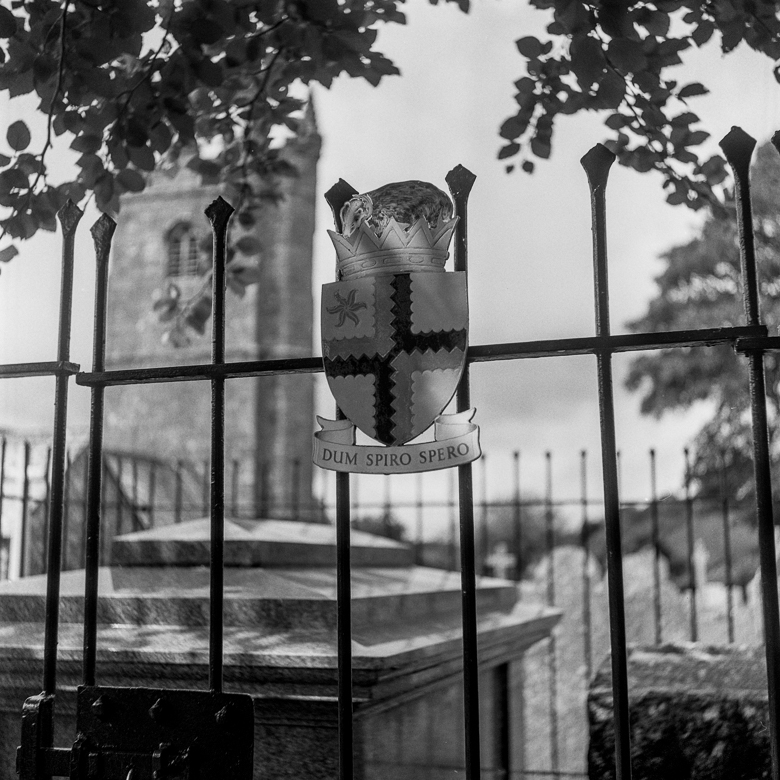
Then a close up at f4 on the Brooke tombs crest, the centre is still sharp, the background nice and soft and vintage. This would make an excellent portrait lens for people with large square heads.
With rain showers threatening and happening, I beat a retreat through the churchyard and climb the winding lanes to the higher moors. The car misses walls by millimetres as I squeeze to the side for oversized pick ups. Then from above, the mass of Sheepstor itself dominates the skyline.
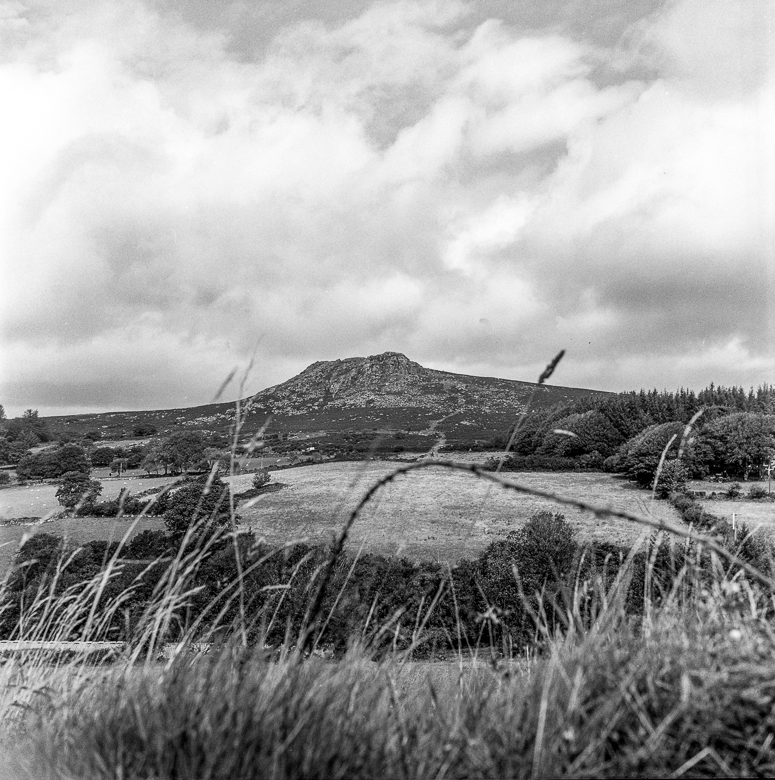
I reckon for developing that the shutter speeds are possibly a little slow, so I shave off 20 seconds of developing rather than make adjustments to the camera settings. It seems to work.
All turn out nicely. It makes life slower, more deliberate and at times more challenging, but it takes great photos. The lens is a cracker. To be honest, I could easily use this regularly. I wouldn’t leave it sitting in the light (although no sign of light leaks), I would invest in a strap and chuck the case in a cupboard, but it’s actually rather lovely and a beautiful thing. Now how many cameras look like this and take photos this good?
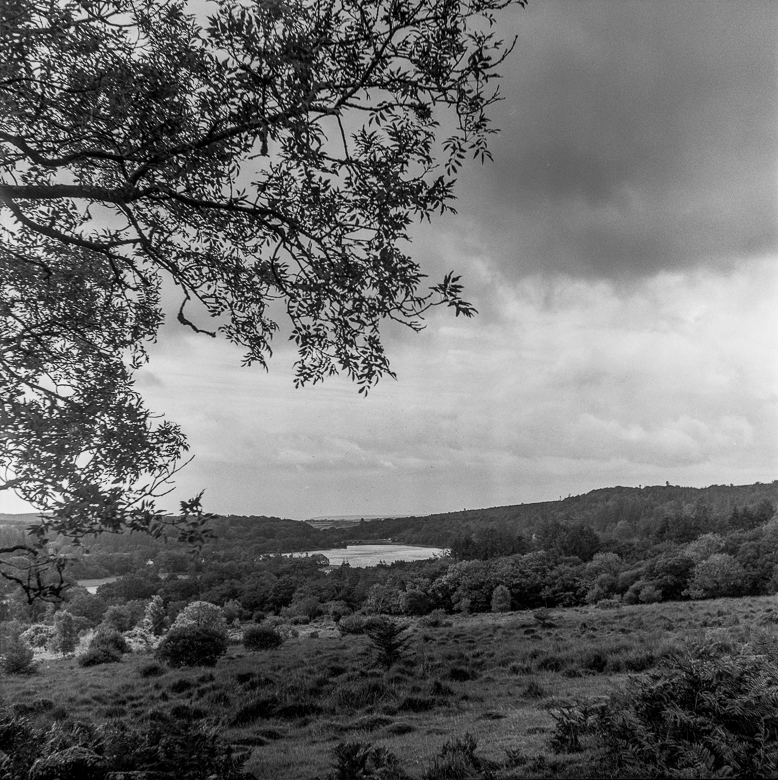
This is shot on Ilford HP5+ at 250 and developed in PMK Pyro. I’m charlesdamorgan on Instagram.
Check out our TLR cameras for sale


